
Outpatient anaesthesia
Individually planned anaesthesia with continuous monitoring and personal recovery care.
Learn about the processAnaesthesia · Intensive care · Hamburg
Outpatient anaesthesia for children and adults – medically experienced, compassionate and reliably at your side.
Welcome
Our experienced specialist anaesthetists and medical assistants support you before, during and after your procedure.
Personal care, clear processes and modern outpatient anaesthesia.
Extensive experience in anaesthesia for children and adults.
Continuous monitoring and reliable care until safe discharge.
Our focus
We care for children and adults undergoing outpatient procedures at selected partner practices in Hamburg and the surrounding area.
Individually planned anaesthesia with continuous monitoring and personal recovery care.
Learn about the processGentle, child-centred care with experience, patience and time for families.
Information for parentsReliable cooperation for surgical practices – flexible, well coordinated and on equal terms.
Become a partnerFor patients
The following guidance helps you prepare. Instructions given personally by your treating practice or our anaesthesia team always take priority.
For safe anaesthesia, please follow the fasting intervals below unless you have received different personal instructions.
Do not eat and do not drink cloudy liquids. Clear liquids may still be consumed initially.
Stop drinking clear liquids. Prescribed preparation tablets may be taken with a small sip of water.
Healthy patients up to the age of 18 may drink small amounts of clear liquids until one hour before anaesthesia unless instructed otherwise.
Tell us about all regular or occasional medicines, including non-prescription products, supplements and herbal preparations. Do not stop any medication on your own; we will agree the correct plan with you individually.
You will have a short personal consultation with the anaesthetist. We check fasting, medication, your general condition and relevant findings, explain the planned anaesthetic and answer your questions. An intravenous cannula is then usually placed.
After outpatient anaesthesia, you must not drive or travel home alone. A responsible adult must collect you and accompany you home safely.
We monitor you in the recovery area until you are sufficiently awake and stable. Depending on the procedure and anaesthetic, this usually takes one to two hours.
Tiredness, reduced concentration or dizziness may occur. Rest and avoid physical exertion.
For 24 hours, do not drive, operate dangerous machinery or make important decisions.
Wait for approval from the team. The timing depends on the procedure and how you feel.
Take prescribed medication and pain relief exactly as discussed.
A responsible adult must remain with you for the first 24 hours.
Contact the treating practice or our team. Outside office hours call 116 117; in an emergency call 112.
Dear parents, we understand that anaesthesia can cause worry. We explain every step calmly and adapt the anaesthetic to your child, their age and the planned procedure.
General anaesthesia is a controlled deep-sleep-like state in which consciousness and pain sensation are switched off. It may be started through an intravenous cannula or breathing mask. Breathing, oxygen levels, heart rate and circulation are monitored continuously.
Your child will be monitored in the recovery area. As soon as possible, you can be together again. Food, drink, pain relief and discharge are agreed individually.
Do not leave your child unattended. No cycling, scootering, climbing, rough play, independent road use or unaccompanied public transport.
Our team
Four specialist anaesthetists and a dedicated assistance team provide safe medicine and personal care.
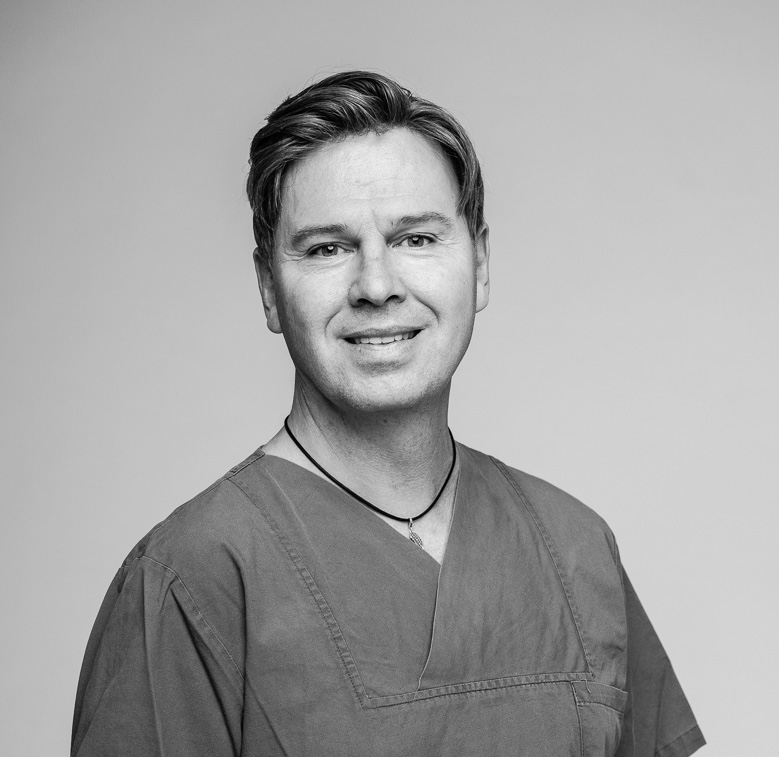
Select a doctor · click the portrait for the CV
For practices & surgeons
Are you looking for an experienced anaesthesia team for your practice? We provide medical expertise, coordinated processes and the required technical equipment.
Our range of services
We provide anaesthesia care across a wide range of surgical specialties:
Well cared for together
An established network of specialised practices and medical facilities.
 Dermatologikum Hamburg
 Der Dozent
 Orthocentrum Hamburg
 Kinderzahnaerztin
 Kieferchirurg Hamburg
 Medical Eye Care
 Gesundheitszentrum Quickborn
 Augen Hamburg
 MKG Dorotheenstraße
 Lidchirurgie Hamburg
 Praxis Clauder
 Oralchirurgie Pinnau
 Facharztzentrum Nord
 Hanse MKG Bergedorf
 CPM Lübeck
 Smile Eyes Hamburg
 UKE Augenpraxis
 EDZ Süderelbe
 Bergman Clinics Bremen
 Traumarzt
 Dienstpilot
Frequently asked questions
Never stop anticoagulant medication on your own. The timing depends on the medicine, the reason it was prescribed and the planned procedure. Contact us and the treating practice early with the exact name and dosage.
Tell us if you use a GLP-1 medicine such as semaglutide or tirzepatide. These medicines may delay stomach emptying. Daily products are generally paused on the day of the procedure; for weekly products, the last dose should usually be at least one week earlier. Always coordinate this with us and the prescribing practice, especially if you have diabetes.
Alcohol, cannabis and other substances can affect anaesthetic and pain medication, breathing and circulation. Your information is confidential and is needed solely for your safety.
A mild runny nose does not automatically cancel the procedure. Please contact us early if you have fever, a strong or productive cough, breathing difficulty or feel significantly unwell. We decide individually whether anaesthesia is safe.
Yes. Bring a clear drink and a small, light snack – something familiar for children. Only start eating or drinking after the team has given permission.
We offer 18 months of accredited specialist training in anaesthesiology, clinical placements and positions for anaesthetists, anaesthesia support staff and medical students.
Contact
For questions about your planned anaesthetic, please first contact the practice carrying out your procedure. For all other enquiries, contact us directly.